Breast Cancer Awareness Month is an opportunity to reflect on the innovations, tools, and approaches reshaping how we prevent, detect, and treat cancer – and how we can empower women to take charge of their health journeys earlier and more confidently.
During ImagineSoftware’s women’s health panel discussion, Healthcare, Focused on HER, leaders in breast imaging, oncology, and interventional radiology shared insights that direct awareness into action. Their guidance centers on three big themes: screening and risk, precision medicine, and innovations in interventional radiology (IR).
Screening & Risk: Start Earlier, Stay Consistent
Start at 25: The Case for Early Risk Assessment
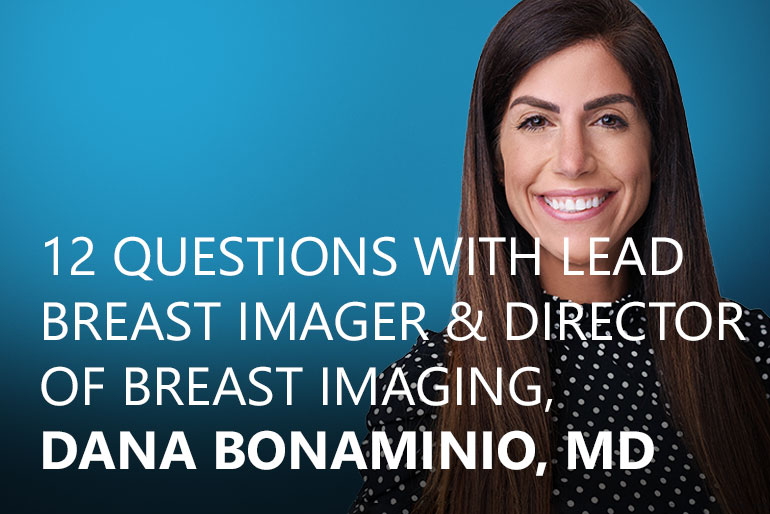
Dr. Dana Bonaminio, Director of Breast Imaging at Ascension Saint Thomas Center for Breast Health, encourages women to begin risk assessment at age 25. This doesn’t mean mammograms at 25, but rather a conversation with your provider about family history, breast density, and other factors.
A practical checklist includes:
- Ask relatives about cancer history (type, age at diagnosis).
- Review breast density with your provider once imaging begins.
- Consider online tools like IBIS for personalized risk scores.
“Knowing your body and your family history is the first step toward personalized care.”
Annual at 40: Why Frequency Matters
For women at average risk, annual screening mammograms should begin at 40. Why yearly instead of every two years? Because early detection is everything. “The point of mammography is to catch what you can’t feel,” Dr. Bonaminio states. An annual cadence gives radiologists the chance to spot subtle changes before they become palpable, and potentially more difficult to treat.
Learn more at the National Breast Cancer Foundation’s National Mammography Program, where you can find a screening facility near you.
Dense Breasts 101: What It Means and What to Do
Breast density is both a risk factor and a barrier to detection. Dense tissue can mask tumors on mammograms, making supplemental imaging (such as ultrasound or MRI) crucial for some women. Radiology practices are leading the way by offering density notifications and personalized follow-up pathways.
“Head in the Sand” Doesn’t Work
Many women delay mammograms out of fear or misconceptions. But as Dr. Bonaminio explains, the test itself is quick, safe, and often far easier than imagined, “Mammography is not in the realm of something that should be as scary as people think.”
Creative campaigns such as “Galentine’s Day mammograms,” where friends book back-to-back appointments and celebrate with coffee afterwards, help normalize screening while making it a social act of self-care.
Precision Medicine & Oncology Care: One Size Fits One
One Size Fits One: A New Era of Care
Oncology nurse Emily Beard emphasizes precision medicine’s innovative care, transforming cancer treatment from one-size-fits-all to one-size-fits-one.
“For years, we gave everyone with the same diagnosis the same treatment. Now, we can pinpoint what’s driving an individual’s cancer and target it directly.”
This approach reduces side effects, improves quality of life, and offers hope for patients whose cancers don’t respond to traditional therapies.
Next-Generation Sequencing: What to Ask
Patients today should feel empowered to ask about next-generation sequencing (NGS) – testing that examines tumor DNA to identify actionable mutations. NGS may reveal treatment options, including clinical trials, that standard protocols would miss.
Questions to bring to your provider include:
- Is my tumor eligible for sequencing?
- How might the results affect treatment options?
- Are there relevant clinical trials I should consider?
Precision Prevention: Beyond Genetics
While some risk factors are set at birth (family history, genes, breast density), many others are modifiable. Hormone exposure, alcohol consumption, weight, and physical activity all influence cancer risk. For employers and population health leaders, investing in prevention and education programs can make measurable differences in long-term outcomes.
Interventional Radiology (IR): Minimally Invasive, Maximally Impactful
The IR Advantage: Options Women Rarely Hear About
Dianne Keen shares her passion for interventional radiology, transforming women’s health from uterine fibroid embolization to minimally invasive procedures addressing pelvic pain. These outpatient options often replace major surgery, providing faster recovery and life-changing symptom relief. Yet many women don’t hear about them until years into suffering.
IR as a Quality-of-Life Multiplier in Cancer Care
IR also plays a role in oncology, offering palliative procedures to ease pain, improving comfort, and extending quality of life for patients living with advanced disease. These techniques don’t replace oncology care but complement it, giving patients more options to live fully while undergoing treatment.
Moving Forward: From Awareness to Action
Women’s health is entering a new era, one defined by earlier risk assessment, personalized medicine, and minimally invasive solutions that improve both survival and quality of life.
- Consumers: Know your risk, schedule your mammogram, and ask about precision medicine.
- Providers: Empower patients with education and referral pathways, especially for IR and supplemental imaging.
- Employers & Policymakers: Support equitable access – coverage for follow-up imaging, funding for research, and time-off policies for preventive care.
This Breast Cancer Awareness Month, let’s move beyond awareness. Let’s commit to early action, innovative care, and equitable access, so every woman has the tools, the knowledge, and the support she needs to thrive.